Why More Homeowners Are Moving Away from Pine Straw
Pine straw has been a go-to in Southern landscaping forever. It’s cheap, easy to spread, and looks clean when it’s fresh.
But here’s the thing a lot of homeowners don’t realize until later: it can also create a really comfortable environment for pests.
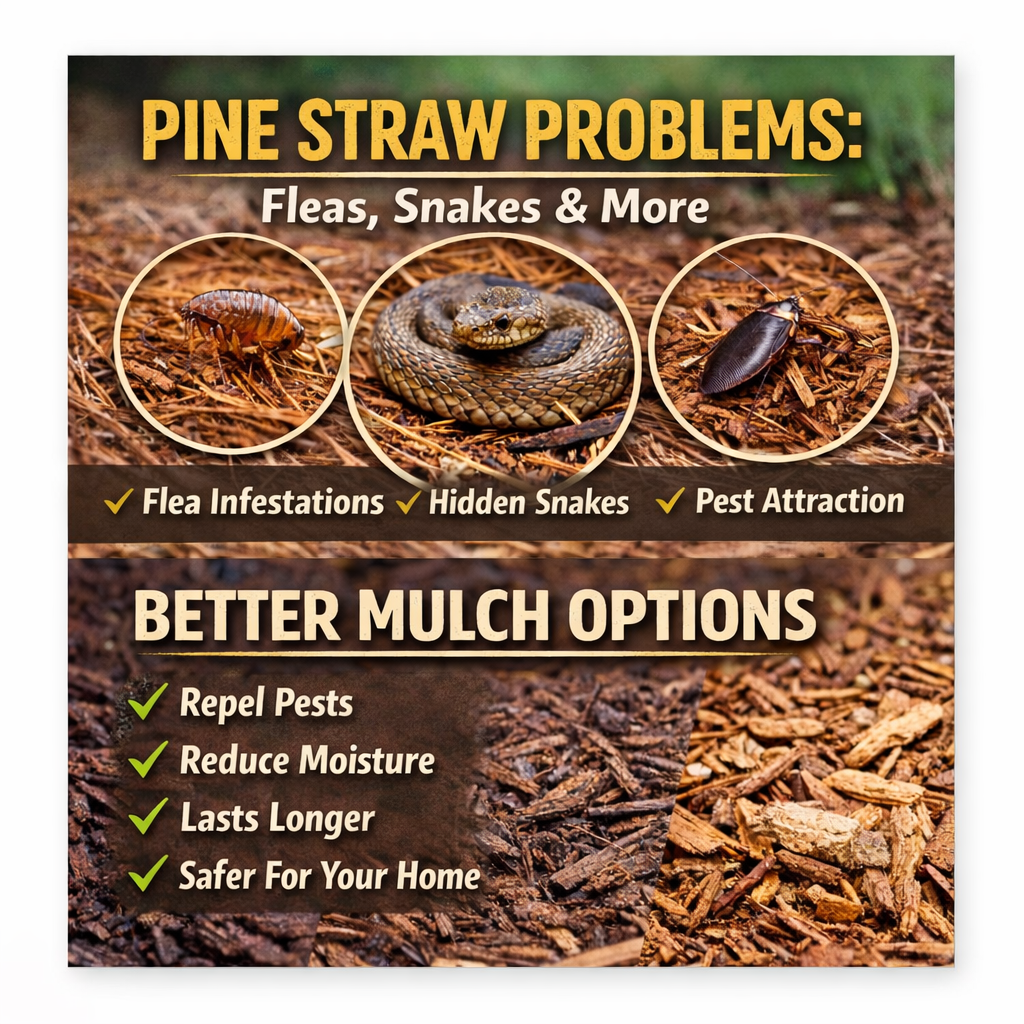
If you’ve been dealing with fleas that won’t go away—or you’ve started noticing more bugs or even snakes around your yard—your mulch might be part of the problem.
The Flea Problem Most People Miss
Fleas don’t just come from pets—they often start outside.
Pine straw creates the exact conditions they like:
- It holds moisture really well
- It blocks sunlight
- It builds up organic debris underneath
That combination gives flea eggs and larvae a protected place to develop.
So if you’re noticing:
- Fleas coming back after treatment
- Bites around your ankles
- Pets constantly picking them up
…it’s very possible your yard is where it’s starting.
Why Snakes Like Pine Straw (Even If It’s Not Obvious)
Pine straw doesn’t “attract” snakes directly—but it creates the kind of environment they like.
Snakes are drawn to:
- Cool, shaded areas
- Places with cover to hide
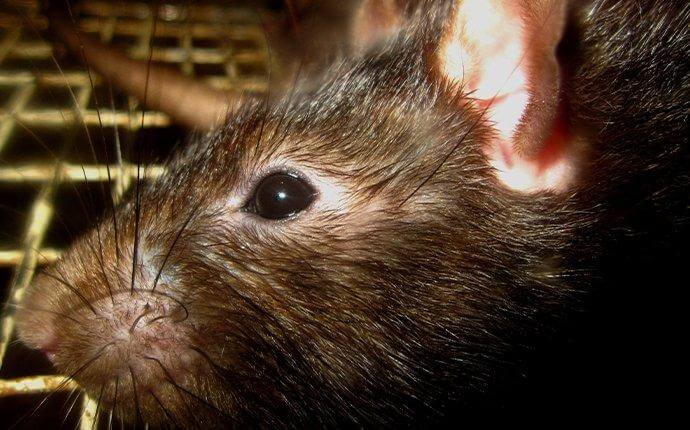
- Areas with food (like rodents, frogs, insects)
And thick mulch checks all those boxes.
Even landscaping experts point out that deep, soft mulch layers can basically act like shelter for snakes.
So if your beds are thick with pine straw—especially near your house—you’re giving them a pretty comfortable hiding spot.
Other Downsides People Don’t Talk About
Even outside of fleas and snakes, pine straw has a few practical drawbacks:
- It breaks down fast → you’re replacing it more often
- It holds moisture → which can lead to more bugs and fungus
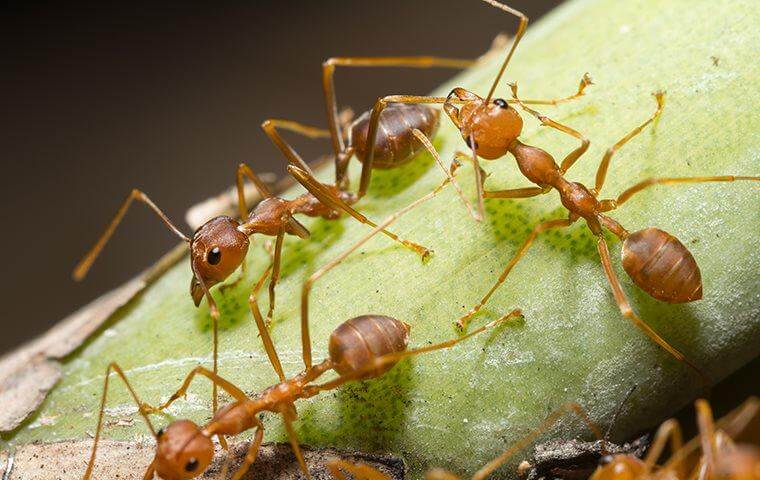
- It builds up near foundations → creating hiding spots for ants, roaches, and more
None of these are dealbreakers on their own—but combined, they can increase pest pressure around your home.
Better Mulch Options (That Don’t Invite Problems)
If you’re thinking about switching, you’ve got solid options that still look great:
Hardwood Mulch
- Breaks down slower
- Doesn’t stay as damp
- More stable long-term
Cedar or Cypress Mulch
- Naturally repels some insects
- Holds up longer
- Often recommended for flea control
Pine Bark Nuggets
- Larger pieces = better airflow
- Less moisture buildup
- Fewer hiding spots
Rock or Stone (Best Near the House)
- No organic material = fewer pests
- Long-lasting
- Great for creating a “buffer zone” around your foundation
If You’re Replacing Pine Straw, Do It Right
Quick tips that make a big difference:
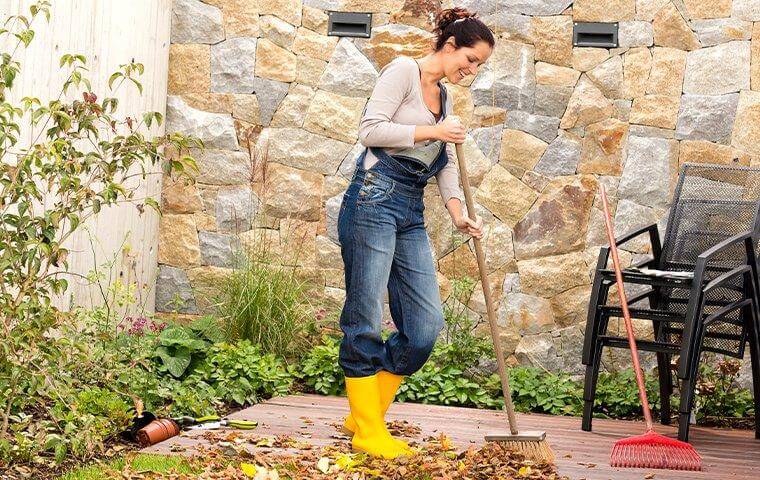
- Remove all the old pine straw (don’t layer over it)
- Check for pest activity before installing new mulch
- Keep mulch around 2–3 inches deep max
- Leave a gap (6–12 inches) between mulch and your foundation
That last one alone can cut down a lot of pest issues.
The Big Takeaway
Pine straw isn’t “bad”—but it can work against you if you’re already dealing with pests.
Switching to a better mulch can help:
- Reduce flea populations
- Make your yard less appealing to snakes
- Lower overall pest activity around your home
Sometimes the fix isn’t another treatment—it’s changing the environment that’s causing the problem in the first place.
Quick FAQ
Does pine straw cause fleas?
No—but it gives fleas the kind of environment they need to survive and multiply.
Is it okay to put pine straw against your house?
Not ideal. It can trap moisture and create hiding spots for pests.
What mulch is best for pest control?
Cedar, cypress, and rock are usually the most pest-resistant options.
Want Help Figuring Out What’s Going On?
If you’re dealing with recurring fleas or noticing more pest activity than usual, it might not just be a treatment issue—it could be your landscaping.
A quick inspection can help pinpoint what’s attracting pests and how to fix it long-term.