
To get rid of flies outside, you need to do three things: remove what attracts them, intercept the flies already coming to your yard with properly placed traps, and keep pressure on throughout the season, because new flies arrive from surrounding properties every day. Sprays and zappers kill the flies you see; the three steps above are what shrink the swarm.
This guide covers why your yard has so many flies, which species you are dealing with, what works and what does not, and when it makes sense to bring in professional outdoor fly control.
Why Are There So Many Flies in My Yard?
Unlike ants or termites, flies do not establish colonies on your property. They are highly mobile insects that travel significant distances in search of food, moisture, and breeding sites. A single backyard can draw flies from neighboring yards, parks, farms, wooded areas, and commercial dumpsters, which is why even spotless properties get swarmed.
The most common attractants around a home include:
- Garbage cans and outdoor recycling bins
- Pet waste
- Compost piles
- Outdoor pet food
- Fallen fruit and decaying vegetation
- Grills and outdoor kitchens with food residue
- Standing organic debris
Flies use scent to find these from impressive distances. If several are present at once, your yard is not just attracting the flies nearby; it is broadcasting an invitation to the whole neighborhood’s fly population.
Know What You’re Swatting: Common Outdoor Flies
Different flies respond to different tactics, so quick identification helps.
House Flies
The fly most homeowners recognize immediately. House flies feed on food waste, animal waste, and decaying organic material. Because they land on garbage and feces before landing on your burger, they are considered potential carriers of bacteria, which makes them more than a nuisance around outdoor dining.
Blow Flies
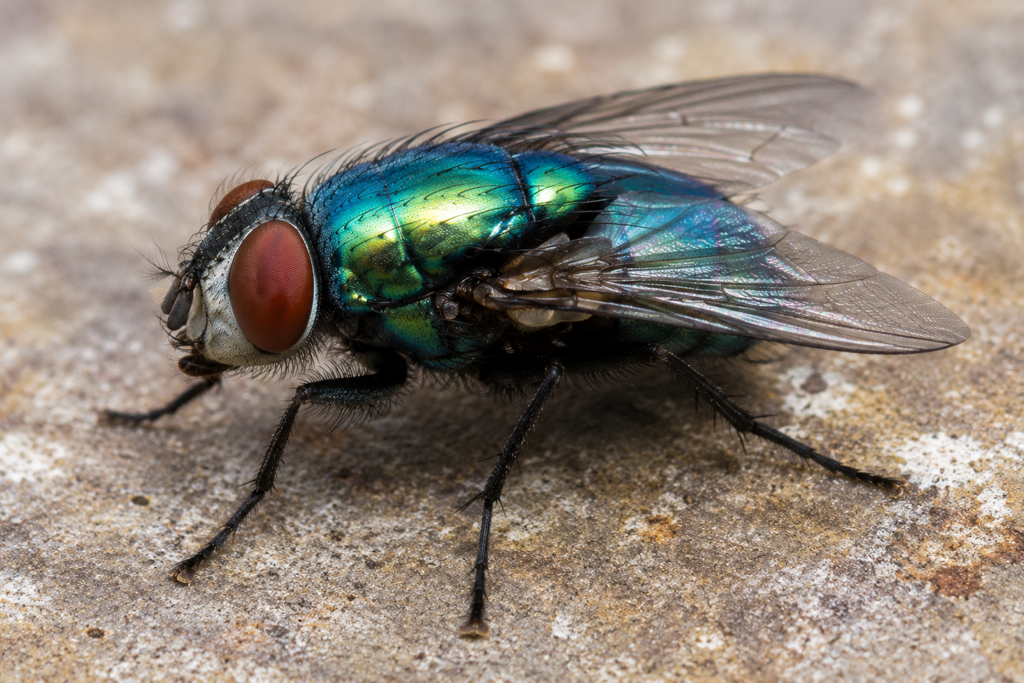
Recognizable by their metallic blue or green sheen, blow flies are drawn to dead animals, garbage, and compost. A sudden indoor swarm of blow flies often signals that an animal has died in a wall, crawlspace, or attic.
Flesh Flies
Flesh flies look like large house flies with gray racing stripes on the thorax. They frequent animal carcasses, pet waste, and decaying matter, and unlike most flies, some species deposit live larvae rather than eggs.
Cluster Flies
Slower and slightly larger than house flies, cluster flies spend summer outdoors and then invade homes in fall to overwinter, which is why you find them gathering at windows on warm winter days.
Horse Flies and Other Biting Flies
If the flies in your yard bite, you are likely dealing with horse flies, deer flies, or stable flies. Female horse flies feed on blood and deliver a genuinely painful bite. They breed near water and moist soil, are strong fliers, and are drawn to movement, dark colors, and carbon dioxide, which is why they find you the moment you step outside. Standard fly tactics help less with biting flies; managing them usually means addressing nearby moisture and using traps designed for them.
How Fast Do Flies Multiply?
One reason fly problems seem to explode overnight is reproductive math. A single female house fly lays batches of 75 to 150 eggs and can produce several hundred in her lifetime. In warm weather, transition from eggs to adults takes as little as 7 to 10 days. That means the handful of flies you ignore this weekend can be a full swarm within two.
How to Get Rid of Flies Outside: 7 Steps That Actually Work
1. Start with sanitation. Pick up pet waste, seal garbage lids, rinse recycling, clean the grill after every use, and remove fallen fruit. This does not eliminate flies, but every attractant you remove lowers the number that choose your yard over the neighbor’s.
2. Fix the moisture. Flies breed in moist organic material. Address clogged gutters, leaky spigots, chronically damp mulch, and drainage problems. This also happens to be step one for mosquito control, so it pays double in summer.
3. Use traps but place them away from people. This is the most common DIY mistake we see. Fly traps work by attracting flies, so a trap hanging next to the patio table pulls flies toward your guests. Place traps 20 to 30 feet from seating areas, between the flies’ likely source and your living space, so flies are intercepted before they reach you.
4. Put fans on the patio. Flies are weak fliers compared to box fans. Steady airflow across a dining table or seating area is one of the cheapest and most reliable ways to keep a specific spot usable during a gathering.
5. Be realistic about scent repellents. Citronella candles, essential oil sprays, and herb plantings can make a small area slightly less attractive for a short time, and that is the honest ceiling. Wind, distance, and fresh fly arrivals erode the effect quickly. Use them as a supplement at the table, not as a control strategy.
6. Skip the gimmicks. Bags of water with pennies, ultrasonic repellers, and similar tricks have no reliable evidence behind them. Bug zappers kill some flies but attract more insects to the area and do little against daytime species that are not strongly drawn to light.
7. Escalate to professional fly control when the swarm keeps winning. If flies keep ruining your patio despite good sanitation and trap placement, the population pressure around your property is bigger than DIY tools can handle. That is exactly the situation professional outdoor fly control is built for.
Why DIY Fly Control Often Falls Short
Most DIY methods share the same limitation: they deal with individual flies instead of fly pressure. Spraying kills the flies present at that moment; new ones arrive within hours. Sticky ribbons and zappers catch dozens while thousands develop nearby. And because flies constantly migrate in from surrounding properties, treating your home’s perimeter, which works well for ants and spiders, barely registers against flies.
Effective fly management comes down to two questions: where are the flies coming from, and where should they be intercepted before they reach the spaces you use? Answering those correctly is mostly about placement and property evaluation, which is where professional service earns its keep.
The Professional Option: NO FLY ZONE Outdoor Fly Control
Most pest control companies do not offer a dedicated outdoor fly service, precisely because flies do not behave like perimeter pests. Aruza built one.
NO FLY ZONE is a professional outdoor fly reduction service designed around interception. A technician evaluates your property, identifies the conditions and travel patterns feeding your fly pressure, and strategically installs professional fly control stations positioned to draw flies away from patios, pools, outdoor kitchens, and pet areas. Each station can capture up to 30,000 flies over its service life.
The service comes in two forms: a one-time installation ahead of a party or event, and a seasonal program that includes an exterior Home Health Inspection, professional stations, and a complimentary re-service if stations fill during peak season. No outdoor program can promise a fly-free yard, and we will not pretend otherwise. What proper station placement delivers is a meaningful, sustained reduction in the flies that reach the spaces where your family spends time.
How to Keep Flies Away Outside Long Term
Whichever route you take, these habits keep fly pressure down all season:
- Pick up pet waste at least every couple of days
- Keep garbage and recycling containers sealed and periodically rinsed
- Clean grill grease trays after each use
- Remove fallen fruit and manage compost properly
- Eliminate standing water and chronically wet spots (your mosquito control efforts will thank you)
- Refresh trap placements as the season and fly activity shift
Frequently Asked Questions About Outdoor Flies
Why are there so many flies in my yard suddenly?
Sudden fly surges usually mean a new attractant appeared: garbage that sat out, pet waste, a dead animal nearby, fallen fruit, or a neighbor’s project like manure or compost. Warm stretches also compress the fly life cycle to about a week, so populations can visibly jump after hot weather.
What smells keep flies away outside?
Flies tend to avoid strong scents like citronella, pine, peppermint, and vinegar-based sprays. The honest catch: scent effects are weak, short-lived, and limited to a few feet in still air. Treat them as table-side comfort, not fly control.
Do outdoor fly traps work?
Yes, when placed correctly. Traps attract flies, so the cardinal rule is distance: keep them 20 to 30 feet away from seating and dining areas, positioned between the fly source and your living space. A trap next to the patio makes the fly problem feel worse, and it is the single most common placement mistake homeowners make.
Do flies bite?
Common house flies do not bite. If you are being bitten outdoors, you are dealing with horse flies, deer flies, or stable flies, which feed on blood and breed near water and moist soil. Biting fly problems are worth a professional evaluation because their sources and controls differ from nuisance flies.
How long do flies live?
Adult house flies typically live 15 to 30 days. The population problem is not lifespan but throughput: each female lays hundreds of eggs that become breeding adults within about a week in summer heat.
When is fly season?
Fly activity rises with temperature, typically ramping in late spring, peaking through mid to late summer, and tapering with the first cool nights of fall. In warmer Southern markets, meaningful fly pressure can run from April into October, which is why Aruza’s seasonal NO FLY ZONE service renews each April.
Take Back Your Backyard
You should not have to plan family time around swatting. Start with sanitation and smart trap placement; add fans for the spaces you use most. And if the flies keep winning, that is not a personal failure, it is population pressure, and it has a professional answer.
Schedule your free Home Health Inspection and find out how NO FLY ZONE outdoor fly control can help you enjoy more and swat less.